VRC — Virtual Rocket Corps
Virtual Rocket Corps (VRC) is a virtual rocket flight club. The basic premise is to promote rocket science through simulating rockets in software. Real rockets are best, but rain, winds, burn bans, and time are always getting in the way.
Open Rocket
OpenRocket is a free, fully featured model rocket simulator that allows you to design and simulate your rockets before building and flying them.
Rocksim Pro
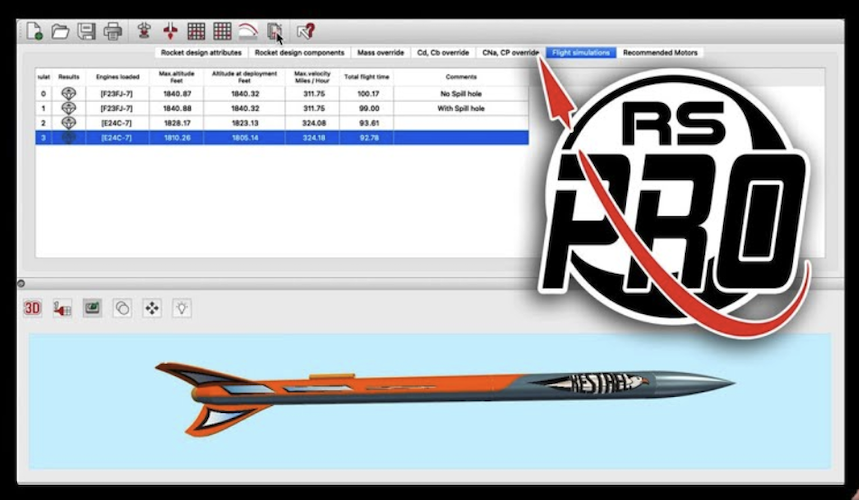
RockSim-Pro is the ultimate tool for serious rocketeers who want complete control over their rocket designs. Whether you're building your first scratch-built rocket or planning a Level 3 high-power certification flight, RockSim-Pro gives you the precision and confidence you need to succeed.
RASAero II
RASAero is a combined aerodynamic analysis and flight simulation software package for model rockets, high power rockets, amateur rockets, and sounding rockets. Its aerodynamic prediction methods are of equivalent accuracy to professional engineering method codes used for missiles, sounding rockets, and space launch vehicles.
RocketPy
RocketPy is a next-generation trajectory simulation solution for high-power rocketry, written as a Python library. It allows a complete 6 degrees-of-freedom simulation of a rocket's flight, including variable mass effects and descent under parachutes, with support for multi-stage rockets and dispersion analysis.
Kerbal Space Program
Assemble fully functional spacecraft from an array of parts and fly them based on realistic aerodynamic and orbital physics. Launch your Kerbal crew into orbit and beyond to explore moons and planets in the Kerbol solar system, and build bases and space stations along the way.
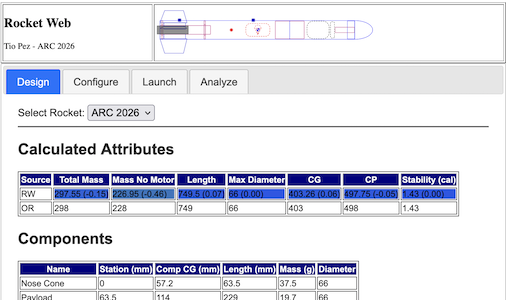
Rocket Web
Tio Pez's web-based (JavaScript) 1DOF simulator — a total work in progress, not polished in the least — serving as a test bed for a proposed ARC rocket that uses airbrakes to achieve precise apogees.
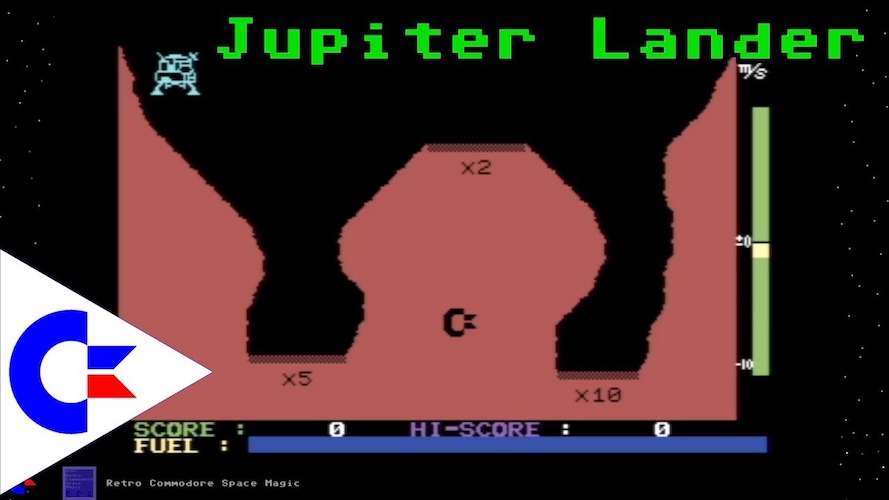
Jupiter Lander
A Commodore 64 game cartridge from back in the 80s. Not a viable simulator option for VRC, just a nod to where this interest first started.
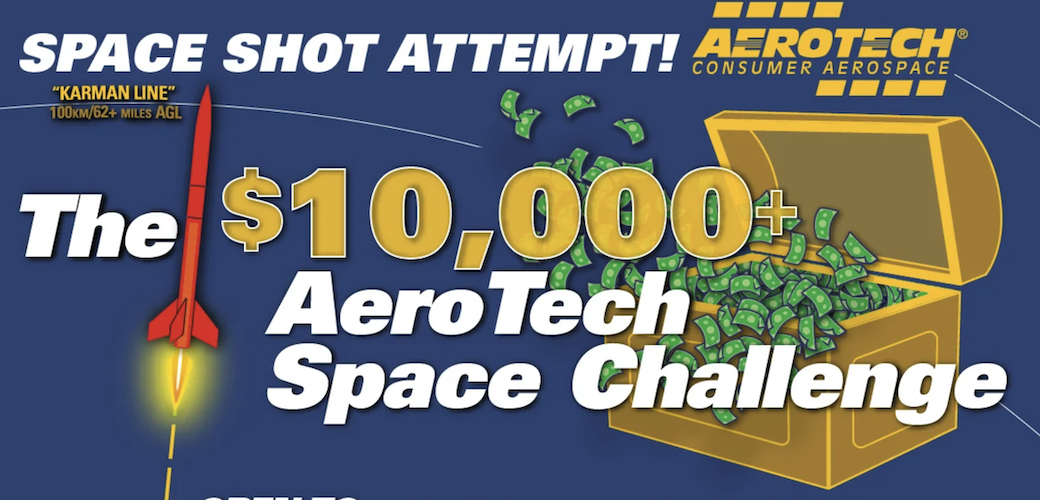 Contest · Design Target
AeroTech $10,000+ Space Challenge
Be first to fly an AeroTech-powered, NFPA-legal rocket to the Kármán line (100 km) on 40,960 N-s of combined impulse or less.
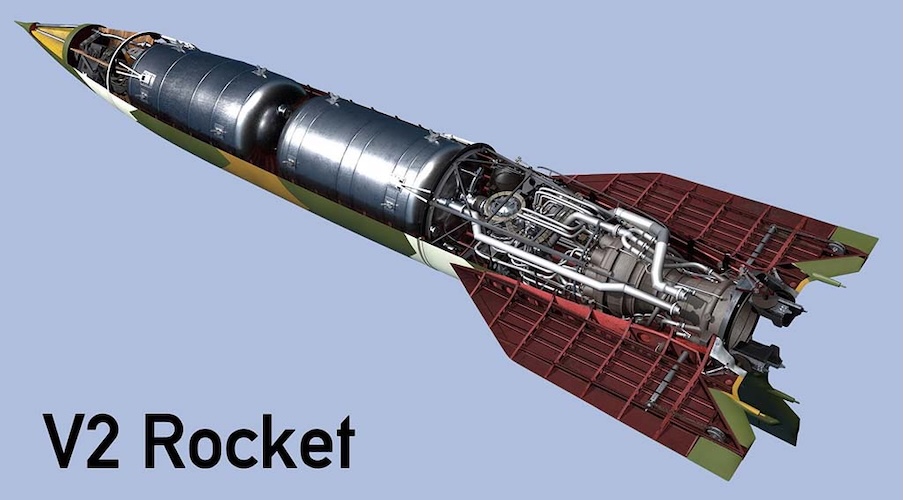
German V-2 (A-4)
The world's first long-range guided ballistic missile, and the technical root of postwar rocketry worldwide.
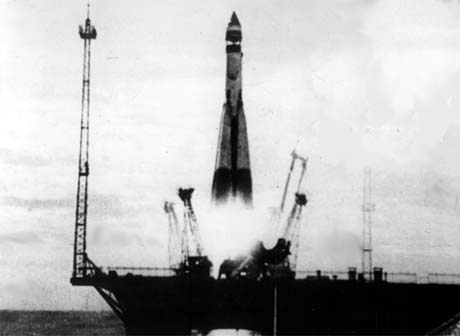
Russian Sputnik (R-7 / 8K71PS)
The R-7-derived vehicle that launched Sputnik 1, the first artificial satellite, and opened the Space Race.
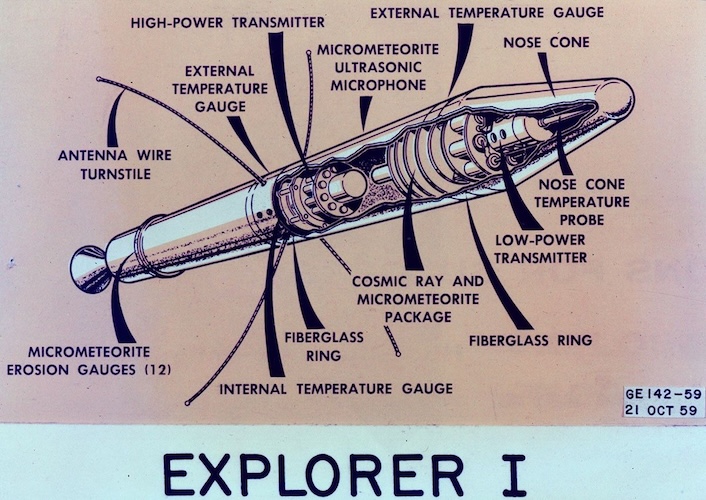
US Explorer 1 (Juno I)
Four-stage, Redstone-derived vehicle that launched America's first satellite in response to Sputnik.
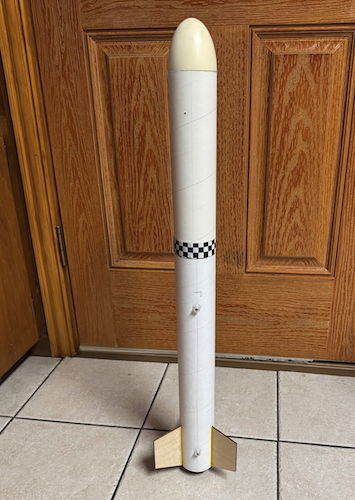
Placeholder — data to be supplied once the rocket's design and format are finalized. The airbrake control research behind it now lives in the Rocket Math book.
Analysis
How do these rockets compare across simulators? How are they similar and different?
TioPez 2026 ARC Rocket
In creating RocketWeb, I compared three different algorithms and checked those values against Open Rocket to debug my calculations. The full write-up now lives in the Rocket Math book: Part 8 — Closed-Loop Airbrake Control →